
Seitan Meaning: 7 Facts, Origins & How It’s Made 2026
Flour, water, and a little patience turn into something that fries up with a chew almost indistinguishable from chicken — no soy, no beans, just wheat. That’s seitan, a food with a name that sounds vaguely alarming (yes, it does look like “Satan” at a glance)
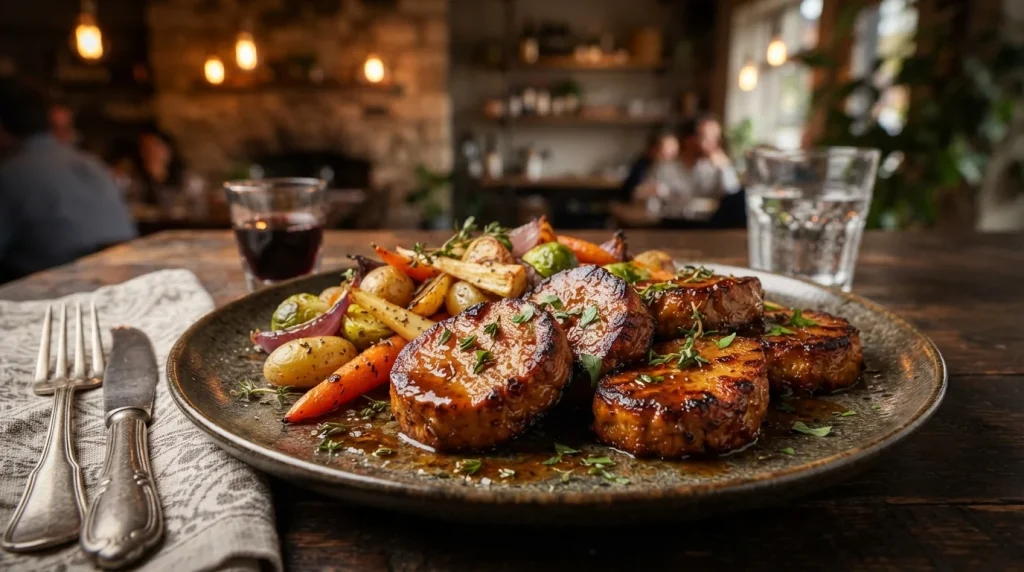
but a genuinely fascinating backstory spanning two countries and about 1,400 years. This guide covers what seitan actually means, where the odd-sounding name comes from, and how the food itself predates the word by over a millennium.
See Also: IMO Meaning
Quick Answer
Seitan is a chewy, high-protein food made from wheat gluten, commonly used as a meat substitute in vegetarian and vegan cooking. The word itself is Japanese, coined in 1961, though the food’s origins trace back much further to Buddhist monks in China.

What Seitan Means
At its simplest, seitan refers to a food made by isolating and cooking the gluten protein found in wheat, producing a dense, chewy, meat-like texture. It has a relatively neutral flavor on its own, which makes it especially good at absorbing marinades,
broths, and sauces — part of why it’s so often used as a stand-in for chicken, beef, or duck in vegetarian and vegan versions of meat-based dishes.
Nutritionally, seitan is notably high in protein and low in fat and carbohydrates compared to many other plant-based proteins, though because it’s pure wheat gluten, it’s completely unsuitable for anyone with celiac disease, a wheat allergy, or gluten sensitivity.
Where the Word Comes From
The word “seitan” is Japanese, coined in 1961 by George Ohsawa, the founder of the macrobiotic diet movement, after being shown the food by one of his students, Kiyoshi Mokutani.
By 1962, a Japanese company was selling wheat gluten commercially under the seitan name, and it was imported into the West under that same name in 1969 by the American natural-foods company Erewhon.
The exact breakdown of the word is genuinely less settled than most food sites suggest. Several sources offer a specific derivation — combining Japanese roots roughly meaning “made of” and “protein” —
but Merriam-Webster lists the word’s origin plainly as unknown, treating that breakdown as a plausible but unconfirmed explanation rather than an established fact. I’m presenting it that way rather than stating a single tidy etymology as settled.
A Food Older Than Its Name
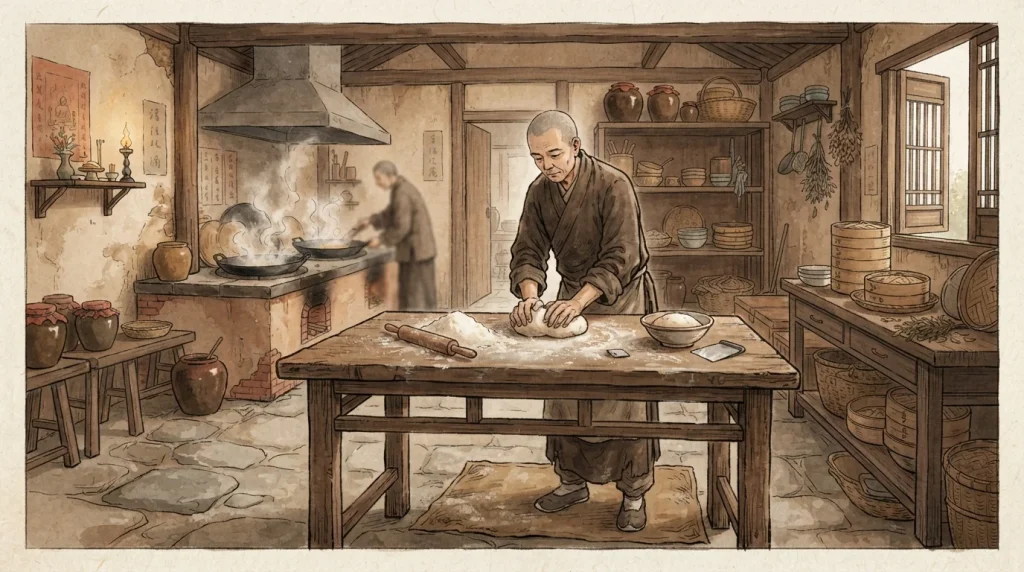
Here’s the part that surprises most people: while the word “seitan” is mid-20th-century Japanese, the food itself is far older and originally Chinese. Wheat gluten prepared this way dates back to around the 6th century in China, where Buddhist monks — following dietary practices that avoided meat —
developed a method of washing wheat dough in water until the starch rinsed away, leaving behind a dense, elastic gluten dough that could be simmered, then fried or sautéed.
That older Chinese tradition is usually called “wheat meat” or “mock meat” in English, and it’s worth noting these terms aren’t strictly identical to modern seitan — some sources distinguish seitan specifically as a version of this wheat gluten food seasoned with soy sauce, a detail that grew out of, but is a bit more specific than, the broader centuries-old Chinese practice.
Barely Known in Japan
One of the most surprising facts about seitan rarely makes it into food-blog explainers: despite being a Japanese-coined word, seitan is not well known or widely used in Japan itself, even though the macrobiotic diet movement that named it originated there.
Outside small macrobiotic circles, the term is largely unfamiliar to Japanese speakers and doesn’t typically appear in Japanese dictionaries. When the food does show up in Japan,
it’s much more commonly referred to by a different term borrowed from English — essentially “gluten meat” rendered in Japanese script — rather than “seitan” at all.
Seitan in the West
Wheat gluten as a food ingredient had actually been documented in the West well before the word “seitan” existed — an English-language scientific description of wheat gluten appeared as early as 1803, and by the 1880s, wheat gluten products were being marketed in the United States,
including by a company connected to John Harvey Kellogg’s Battle Creek Sanitarium. The Seventh-day Adventist movement, with its emphasis on vegetarian diets, also promoted wheat gluten foods from the late 1800s onward, decades before the modern “seitan” name arrived from Japan.
More recently, seitan has found a new, much younger audience through a viral “flour-and-water chicken” trend on TikTok, introducing homemade seitan-making to people well outside its traditional vegan and macrobiotic circles.

FAQ
What does seitan mean in simple terms? It refers to a chewy, high-protein food made from wheat gluten, commonly used as a plant-based substitute for meat.
Is seitan Japanese or Chinese? Both, in different ways — the word “seitan” is Japanese, coined in 1961, but the food itself originated centuries earlier in China, developed by Buddhist monks.
What is seitan made of? Vital wheat gluten — the main protein in wheat — is mixed with water and often seasonings like soy sauce, then kneaded, rinsed to remove starch, and cooked (typically simmered, then fried, baked, or sautéed).
Can people with gluten sensitivity eat seitan? No. Because seitan is essentially pure wheat gluten, it’s unsuitable for anyone with celiac disease, a wheat allergy, or non-celiac gluten sensitivity.
How is seitan different from tofu or tempeh? Tofu is made from condensed soy milk and has a smooth, soft texture; tempeh is made from fermented whole soybeans with a firm, textured bite. Seitan, made from wheat gluten rather than soy, generally has the closest texture to actual meat of the three.
Is seitan commonly eaten in Japan? Not especially — despite the word being Japanese in origin, seitan remains relatively unknown outside macrobiotic circles there, and the food is more commonly known by a different, English-derived term.