Disposition Meaning: 10 Facts, Legal, Psychological & Everyday Uses (2026)
A vet describes your new puppy as having “an excellent disposition,” a lawyer mentions “the final disposition of the case,” and a hospital discharge form lists your “patient disposition” — three completely different fields, one word doing very different jobs in each.

This guide covers what disposition actually means across all its major senses, the surprisingly large word family it belongs to, and the specific nuances that separate it from close cousins like “predisposition” and “character.”
See Also: Cornichon Meaning
Quick Answer
Disposition most commonly means a person’s usual mood, temperament, or characteristic attitude — as in “a cheerful disposition.” It also has distinct, important meanings in law (the final settlement of a case or transfer of property),
medicine (a patient’s discharge or care status), and philosophy (a tendency or potential a thing has to behave a certain way under specific conditions).

What Disposition Means in Everyday Use
In its most common everyday sense, disposition refers to a person’s (or animal’s) usual attitude, mood, or emotional outlook — the general pattern of how they tend to feel and react to the world.
Someone with a “sunny disposition” tends toward cheerfulness and optimism; a dog described as having “an excellent disposition” is generally friendly and even-tempered around people.
This sense also extends to a broader tendency or inclination toward something specific, not just a general mood: “she has a disposition toward generosity” or “he showed a disposition to argue about everything” both describe a characteristic leaning or habitual tendency, rather than a single mood in the moment.
Where the Word Comes From
Disposition traces back to the Latin noun dispositio, meaning “arrangement,” “management,” or “placement,” derived from the verb disponere — combining dis- (“apart”) with ponere (“to put” or “to place”). Put together, the root idea is something close to “to put things in their proper places” or “to arrange in order.”
That ponere root turns out to be one of the most productive in English, connecting disposition to a surprisingly large family of otherwise unrelated-looking words: position, compose, propose, expose, deposit, oppose, and dispose itself all trace back to the same Latin root, each combining it with a different prefix to arrange a different specific meaning.
Disposition’s original Latin sense — arranging things into proper order — is also the conceptual thread connecting all of its modern, seemingly unrelated technical meanings: whether it’s arranging your emotional tendencies (personality),
arranging a legal matter’s resolution (law), or arranging a patient’s next step in care (medicine), each usage circles back to some version of “how something has been settled or arranged.”
Disposition vs Predisposition
These two words overlap heavily but aren’t perfectly interchangeable, and Merriam-Webster draws a useful distinction. When referring to someone’s usual mood or attitude, only “disposition” is correct — you wouldn’t describe someone’s baseline cheerfulness as their “predisposition.”
When referring to a tendency or inclination toward something, the two words become largely synonymous: someone might have either “a disposition” or “a predisposition” toward generosity, and both would be understood the same way.
There’s one notable exception worth knowing: in medical contexts specifically, “predisposition” is by far the more common choice — you’ll almost always see “a genetic predisposition to a particular disease
” rather than “a genetic disposition,” even though the underlying meaning (an inclination or susceptibility toward something) is essentially the same.
Disposition vs Character vs Personality
These three words are often used loosely as synonyms, but there’s a real distinction worth drawing. Disposition refers specifically to mood and general attitudinal outlook — whether someone tends to view the world positively or negatively. Character refers to a person’s underlying moral values and ethical makeup —
the principles that guide their choices, independent of mood. Personality is the broadest of the three, encompassing the whole complex of traits, behaviors, and characteristic ways someone thinks and acts,
including but not limited to their disposition and character. In short: disposition is about temperament and mood, character is about moral substance, and personality is the larger picture both feed into.
Disposition in Legal Contexts
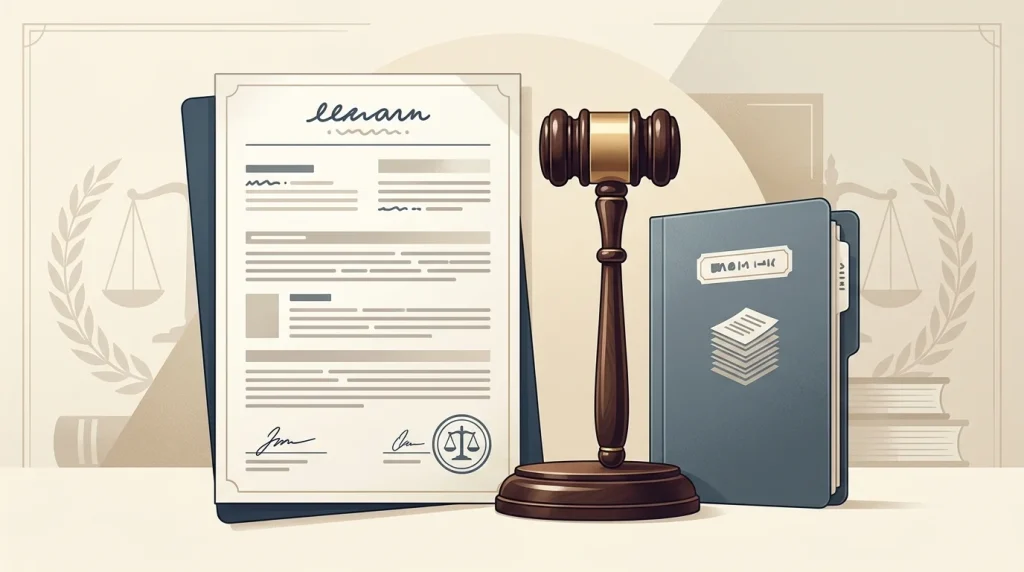
Legal usage of “disposition” covers several distinct but related meanings, and it’s one of the areas where the word does genuinely different work depending on context:
- Final determination of a case — the ultimate resolution or outcome of a legal matter, such as a court’s ruling, a settlement, or a dismissal. “The accused was detained for seven months while awaiting disposition of his case” reflects this sense.
- Sentencing in juvenile cases — in juvenile court specifically, “disposition” often refers to the equivalent of a sentence handed down to a convicted minor, distinct from the terminology used in adult criminal proceedings.
- Transfer of property or rights — the act of transferring ownership, or the power to make decisions about the use or transfer of property, commonly relevant in wills and estate planning: “a will is a legal document used in the disposition of property.”
- Formal property deeds (Scots law) — in the specific context of Scottish property law, a “disposition” refers to a formal legal deed used to transfer ownership of heritable property, most often land, functioning similarly to a deed of conveyance in other legal systems.
Across all these legal senses, the throughline is resolution or arrangement — settling how a case, an asset, or a right will ultimately be handled.
Disposition in Medicine
In healthcare specifically, “patient disposition” refers to the determined next step or outcome of a patient’s treatment or hospital visit — whether they’re discharged home, admitted for further care, or transferred to another facility. This is a practical, operational term used heavily in hospital administration and emergency medicine,
since disposition decisions directly affect resource allocation, bed availability, and continuity of care. It’s a distinctly different usage from the everyday “personality” sense, though it shares the same underlying idea of a matter being settled or arranged into its next stage.
Disposition in Philosophy
Philosophy and logic use “disposition” in a more technical, abstract sense: a dispositional property is one that doesn’t describe an object’s current, observable state, but rather its tendency or potential to behave a certain way under specific conditions.
Fragility is the classic example — a glass is fragile whether or not it’s currently breaking, because fragility describes what the glass would do if struck or dropped, not what it’s doing right now. Solubility works the same way: a sugar cube is soluble even sitting dry on a counter, because solubility describes its potential behavior in water, not its current state.
This philosophical framework, sometimes called dispositionalism, treats properties like fragility, solubility, and even traits like courage as genuine, real features of objects and people — not just descriptions of what has already happened, but real tendencies that would produce specific outcomes under the right circumstances.

The Dispositionist vs Situationist Debate
Social psychology uses “disposition” as the foundation for an interesting ongoing debate about how to best explain human behavior. Dispositionists favor explanations rooted in internal factors — personality traits, beliefs, values, or abilities — attributing someone’s actions primarily to who they are as a person.
Situationists, by contrast, emphasize external circumstances — arguing that behavior is often better explained by the specific situation someone finds themselves in, rather than by fixed internal traits. A dispositionist might explain someone’s bankruptcy as the result of personal carelessness or poor judgment; a situationist would more likely point to external forces like divorce,
medical costs, or job loss as the real drivers, regardless of the person’s underlying character. Neither view fully “wins” this debate — most contemporary psychologists see behavior as shaped by some interaction of both dispositional and situational factors, rather than either one in isolation.
FAQ
What does disposition mean in simple terms? Most commonly, a person’s usual mood, temperament, or characteristic attitude — though the word also has distinct technical meanings in law, medicine, and philosophy.
What does disposition mean in a legal case? The final resolution or determination of a legal matter — how a case ultimately gets settled, dismissed, or decided by a court.
What is patient disposition in a hospital? The determined next step for a patient’s care — whether they’re discharged, admitted, or transferred to another facility.
What’s the difference between disposition and predisposition? For describing mood or attitude, only “disposition” is correct. For describing a tendency or inclination, the two are largely interchangeable, except in medical contexts, where “predisposition” is strongly preferred (as in “a genetic predisposition to a disease”).
What’s the difference between disposition and personality? Disposition specifically refers to mood and general attitude, while personality is the broader combination of all someone’s traits and behavioral patterns, including their disposition.
What does disposition mean in philosophy? A dispositional property describes an object’s tendency or potential to behave a certain way under specific conditions — like fragility describing a glass’s tendency to break if struck — rather than its current, observable state.
What is a disposition in Scots law specifically? A formal legal deed used to transfer ownership of heritable property, typically land, within the Scottish legal system.
What is the dispositionist vs situationist debate? A social psychology debate over whether behavior is better explained by internal personality traits (dispositionist view) or external circumstances (situationist view), with most modern psychologists favoring some combination of both.