
OEM Meaning: 7 Facts, Uses & Auto vs Tech Definitions 2026
Your mechanic says you need an “OEM part,” your new laptop came with an “OEM license” for Windows, and somewhere in a business article you might see a company described as “an OEM for the automotive industry.”
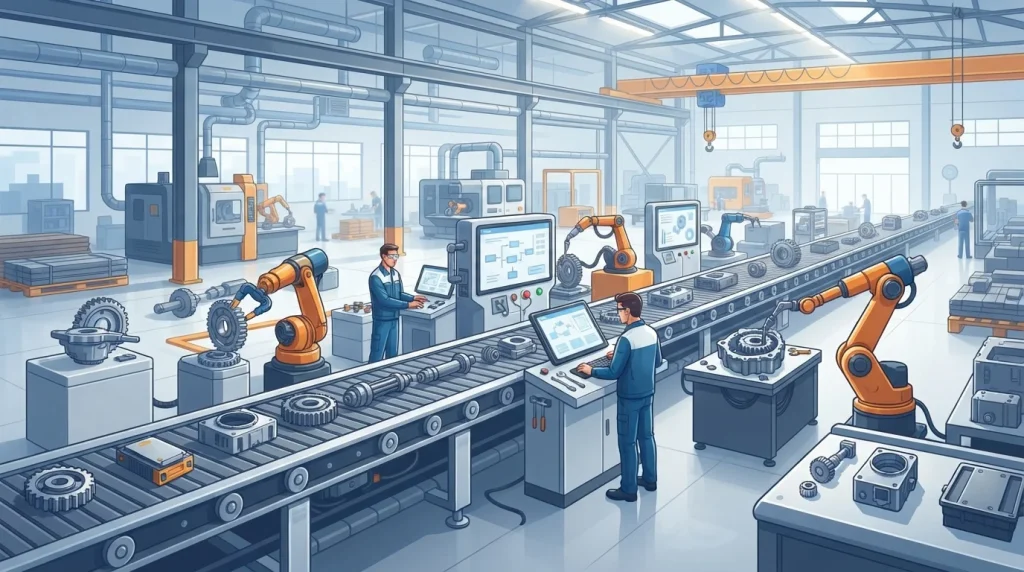
Same three letters, and yet the person actually being called the OEM can be completely different depending on which conversation you’re in. This guide untangles what OEM really means, why the term flips depending on context, and how to use it correctly.
See Also: Condescending Meaning
Quick Answer
OEM stands for Original Equipment Manufacturer — a company that makes parts, components, or products that get built into, or sold as part of, another company’s finished product. In everyday automotive use, “OEM parts” refers to parts made or branded by the original car manufacturer, as opposed to generic aftermarket parts.
See Also: Nefarious Meaning
What OEM Means
At its core, OEM describes a business relationship: one company manufactures something — a part, a component, or sometimes an entire product — that another company then incorporates into its own finished product,
often sold under that second company’s brand name. The classic example is an engine or spark plug manufacturer supplying parts that get assembled into a car sold under a well-known automaker’s name.
Wikipedia notes that the term is genuinely ambiguous, and this isn’t an exaggeration — its precise meaning shifts noticeably depending on the industry and even the specific conversation you’re having.
The Confusing Part: Who Is “The OEM,” Exactly?
This is the detail most explanations skip past too quickly. In the strict business and supply-chain sense, the OEM is the supplier — the company that actually manufactures the underlying part or component.
When Microsoft supplies the Windows operating system to Dell or HP for pre-installation on new computers, Microsoft is the OEM in this relationship, even though most people would casually call the finished laptop “a Dell,” not “a Microsoft.”
But flip over to everyday automotive-parts conversation, and the term gets used almost in reverse. When your mechanic recommends “OEM parts” instead of aftermarket ones, they mean parts made or authorized by the original car manufacturer — Toyota-branded parts for a Toyota, not parts from an unrelated third-party supplier.
In this usage, the car brand itself is effectively treated as “the OEM,” even though, strictly speaking, the actual manufacturer of that specific part might be a different company entirely that supplies parts to Toyota.
So depending on which side of the conversation you’re in — the tech/business supply chain versus everyday car-repair talk — “the OEM” can refer to either the original component supplier or the branded end-product company, which is exactly why the term causes so much confusion.
OEM in Automotive Contexts
When shopping for car parts, you’ll typically see two categories:
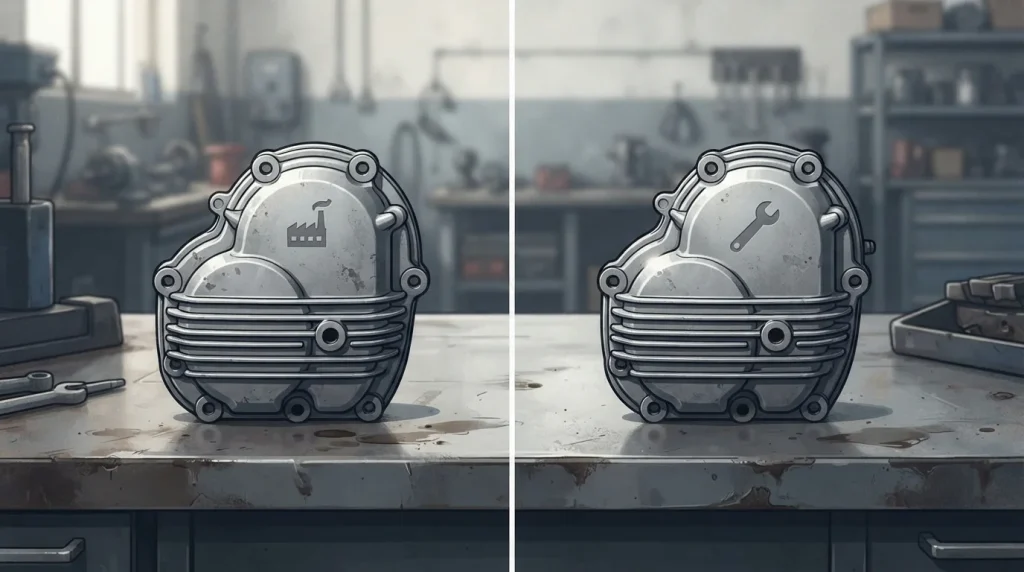
- OEM parts — made by, or to the exact specifications of, the original manufacturer that built the part for your specific vehicle when it was new. These are designed to match the original fit and performance exactly.
- Aftermarket parts — made by companies unrelated to the original vehicle manufacturer, designed to function as replacements or upgrades, sold after the car has already left the factory.
OEM parts are generally considered a safer bet for guaranteed fit and compatibility, while aftermarket parts often offer more variety and lower prices, with quality varying more by manufacturer.
OEM in Tech and Software
In technology, OEM shows up constantly, even when it’s invisible to the end user. The processor, display, or motherboard in your laptop was very likely built by a specialized OEM supplier and sold to the brand whose logo appears on the finished device.
Software licensing works similarly: an “OEM license” for an operating system like Windows is a version sold specifically to hardware manufacturers for pre-installation on new devices, typically at a different price point and with different terms than a retail license bought separately.

OEM vs ODM vs VAR
Three related terms are worth distinguishing clearly:
- OEM (Original Equipment Manufacturer) — manufactures parts or products, typically based on another company’s specifications or designs.
- ODM (Original Design Manufacturer) — goes a step further, both designing and manufacturing a product, which another company then sells under its own brand.
- VAR (Value-Added Reseller) — purchases a finished OEM product and enhances it with additional features, services, or branding before reselling it to end customers.
The distinction between OEM and ODM specifically comes down to who does the actual product design: an OEM builds to someone else’s specs, while an ODM handles design work as well.
FAQ
What does OEM stand for? Original Equipment Manufacturer — a company that produces parts, components, or products used in or sold as part of another company’s finished offering.
What does OEM mean for car parts? It refers to parts made by, or to the exact specification of, the vehicle’s original manufacturer, as opposed to generic aftermarket alternatives.
Is OEM better than aftermarket? Not necessarily “better” across the board — OEM parts generally offer guaranteed fit and manufacturer-level quality, while aftermarket parts can offer more variety and lower prices, with quality depending heavily on the specific aftermarket brand.
What does OEM software mean? It refers to software, like an operating system, licensed specifically to hardware manufacturers for pre-installation on new devices, typically under different terms and pricing than retail software licenses.
What’s the difference between OEM and ODM? An OEM manufactures products based on another company’s design and specifications. An ODM handles both the design and the manufacturing, which another company then sells under its own brand.
Why does “OEM” sometimes seem to mean different, almost opposite things? Because the term is used from different points in the supply chain — sometimes referring to the underlying component supplier, and sometimes, especially in casual automotive conversation, referring to the original branded manufacturer as opposed to third-party aftermarket sellers.