Seychelles Meaning: 7 Facts, Name Origin & History 2026
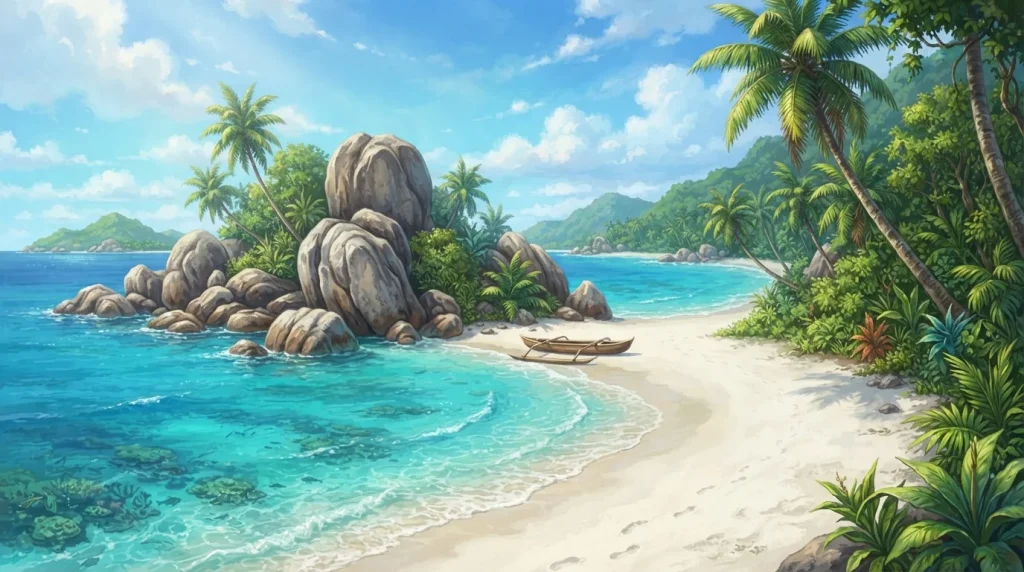
Picture powder-white beaches, granite boulders, and turquoise water, and it’s tempting to assume a name as pretty as “Seychelles” must translate to something poetic — maybe “sea shells,” maybe something tied to the islands’ natural beauty.
It doesn’t. The real story is about French politics, not poetry. This guide covers exactly where the name Seychelles comes from, corrects a claim floating around some name-meaning sites, and looks at how the name changed hands from French to English.
See Also: Cantab Meaning
Quick Answer
Seychelles doesn’t have a descriptive meaning in any language — it’s named after a person. The islands were named in 1756 in honor of Jean Moreau de Séchelles, France’s Controller-General of Finances under King Louis XV. The spelling was later anglicized to “Seychelles” after Britain took control of the islands in 1794.
What Seychelles Means
Unlike many place names that describe a landscape, a resource, or a local word, Seychelles carries no inherent meaning at all — it’s a surname turned into a place name. The islands were named in honor of a specific 18th-century French official, not for any quality of the land, water, or geography.
This makes Seychelles similar to plenty of other places named after people rather than descriptions — think Washington, D.C., or Bolivia — where the country’s name is really a tribute, not a translation.
Where the Name Comes From
In 1756, the French explorer Nicholas Morphey led an expedition that formally claimed the archipelago for France and named it “Isle de Séchelles,” honoring Jean Moreau de Séchelles,
who was serving as France’s Controller-General of Finances under Louis XV at the time and had also become president of the French East India Company a couple of years earlier.
Naming newly claimed territory after prominent officials and patrons back home was common colonial-era practice, and Séchelles fit that pattern.
Mahé: The Island Named First {#mahe-island}
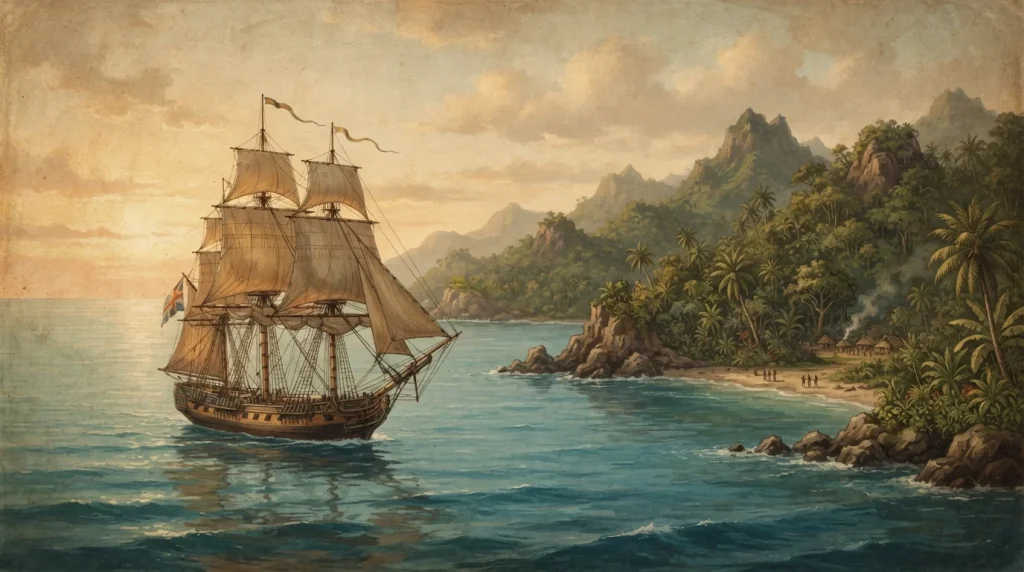
The naming history is actually a two-step story most explanations flatten into one event. In 1742, French explorer Lazare Picault landed on what’s now the largest island in the group and, struck by its lush, fertile appearance, initially called it “Île de l’Abondance” (Island of Abundance).
When he returned two years later to map it more thoroughly, he renamed it Mahé, honoring his patron, Bertrand-François Mahé de La Bourdonnais, the French administrator of Mauritius who had sponsored the expedition.
It was only afterward, in 1756, that the wider island group was formally named Séchelles in the separate naming event described above. So Mahé (the island) and Séchelles (the archipelago) were each named after different men, in different years, for different reasons — a distinction most short explainers skip entirely.
From French Séchelles to English Seychelles {#french-to-english}
The islands remained under French control until 1794, when Britain took possession of them during the Napoleonic-era conflicts between the two powers. It was the British who altered the spelling from the
French “Séchelles” to the anglicized “Seychelles,” which has remained the standard spelling ever since, including after Seychelles became an independent republic within the Commonwealth in 1976.
A Common Misconception About the Name {#misconception}
Some name-meaning and baby-name websites claim “Séchelles” derives from an Old French word meaning “dry,” suggesting the name describes the land itself. This doesn’t hold up against credible etymological and historical sourcing.
Every serious historical and etymological reference agrees Séchelles is simply the family surname of Jean Moreau de Séchelles, with no descriptive meaning behind it — a fairly ordinary case of a place being named after a person, not a hidden poetic translation waiting to be uncovered.
Basic Facts About Seychelles {#basic-facts}
A few quick geographic facts worth knowing alongside the name origin: Seychelles is an archipelago of about 115 islands in the Indian Ocean, roughly 1,500 kilometers east of mainland Africa and northeast of Madagascar.
Its capital, Victoria, sits on Mahé, the largest island. The demonym for a person from Seychelles is Seychellois (masculine) or Seychelloise (feminine), taken directly from the French.
FAQ
Does Seychelles mean anything in French? No. It’s a proper noun derived from a family surname, Séchelles, with no independent descriptive meaning in French or any other language.
Who is Seychelles named after? Jean Moreau de Séchelles, France’s Controller-General of Finances under King Louis XV, honored when the islands were formally claimed and named in 1756.
Why is the English spelling different from the French? Britain took control of the islands from France in 1794 and altered the spelling from “Séchelles” to “Seychelles,” which has remained standard ever since.
Is Mahé the same as Seychelles? No — Mahé is the largest individual island within the Seychelles archipelago, named separately in 1744 after a different person (Bertrand-François Mahé de La Bourdonnais) than the 1756 naming of the wider island group.
Is “Seychelles” related to the word “sea shells”? No, despite the coincidental phonetic resemblance — the name has no etymological connection to shells or the sea. It comes entirely from the French surname Séchelles.
Can Seychelle be used as a given name? Yes, it’s occasionally used as a feminine given name referencing the islands, though it doesn’t carry an independent translated meaning beyond being a place-name reference.