Myrrh Meaning: 10 Facts, Biblical Symbolism & Modern Uses 2026
Every Christmas, the Nativity story mentions three gifts brought to the infant Jesus — gold, frankincense, and myrrh — and while gold and frankincense are fairly self-explanatory, myrrh tends to remain a mystery.

It’s not gold, it’s not quite an ordinary perfume, and its actual name carries a meaning that fits its story far more than most people realize. This guide covers what myrrh actually is, where its name comes from, and the striking way it appears at both the beginning and end of the Christian gospel narrative.
See Also: Neti Meaning
Quick Answer
Myrrh is an aromatic gum resin harvested from thorny trees of the genus Commiphora, native to Arabia and the Horn of Africa, historically used as perfume, incense, medicine, and in embalming.
Its name comes from Semitic roots literally meaning “bitter,” and it’s most widely known today as one of the three gifts the Magi brought to the infant Jesus in the Christian nativity story.
What Myrrh Actually Is
Myrrh is a natural gum resin — a sticky sap that exudes from the bark of certain small, thorny trees and shrubs in the genus Commiphora, part of the Burseraceae plant family, native to regions of Arabia and the Horn of Africa (modern-day areas including Somalia, Ethiopia, and Yemen).
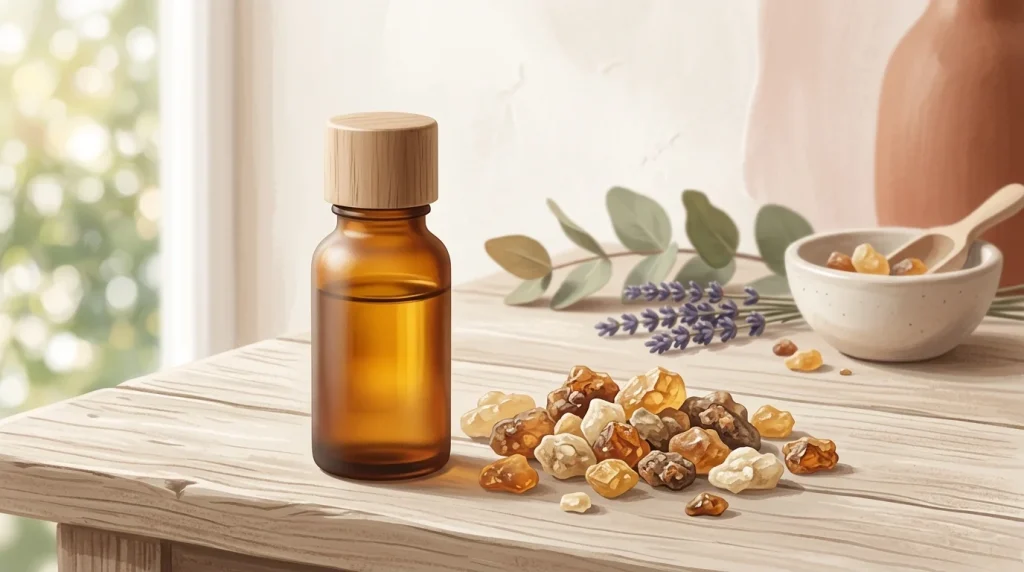
When the resin first emerges from the tree’s bark, it’s oily and soft; exposed to air, it hardens into small, yellowish-to-reddish-brown globules or “tears,” which is the traditional form myrrh has been harvested and traded in for thousands of years.
It has a strong, somewhat bitter, pungent aroma and taste, which historically made it valuable across multiple, quite different uses: as a perfume and incense ingredient, as a component of medicine, and — significantly, in the ancient world — as part of the embalming and burial process.
Where the Word Comes From: A Name That Means “Bitter”
Here’s a detail worth leading with, since it’s both simple and genuinely striking: the word myrrh literally means “bitter.” Merriam-Webster traces the English word through Latin myrrha and Greek, ultimately to Semitic roots — specifically Arabic murr, meaning “myrrh,”
which is itself the Arabic word for “bitter.” The parallel Hebrew word, mor, carries the exact same core meaning. Both the Hebrew and Arabic names for this substance are, at their root, simply the word “bitter” — a name earned honestly, given the resin’s sharp, astringent taste and smell.
That name feels particularly fitting given how closely myrrh became associated with death, mourning, and burial throughout its history and its most famous biblical appearances — a bitter-named substance forever linked to some of the most solemn moments in the texts where it appears.
A Separate Mythological Origin Story: Myrrha in Greek Mythology
Distinct from the actual Semitic linguistic root described above, Greek mythology offers its own, very different explanation for the substance’s name — a poetic origin story rather than genuine etymology. In the myth, most famously told in Ovid’s Metamorphoses, Myrrha was a princess cursed with a forbidden, incestuous desire for her own father, King Cinyras.
After the two conceived a child together (Adonis, in the wider myth), Myrrha was transformed by the gods into a tree as both punishment and mercy, and her tears — shed in shame and grief — became the fragrant, bitter resin that bears her name.
This is a mythological explanation for the plant’s name in Greek storytelling, not an actual historical or linguistic origin — the real etymological root is the older Semitic word for “bitter” described above, which predates and is unrelated to the Greek myth.
Myrrh in the Bible: A Story That Comes Full Circle
Myrrh appears repeatedly throughout the Bible, and its presence forms a genuinely striking narrative arc across the life of Jesus specifically, appearing at three distinct, symbolically loaded moments:
At his birth: Myrrh was one of three gifts — alongside gold and frankincense — brought by the Magi (wise men) to the infant Jesus, as recorded in Matthew 2:11. Some sources note that myrrh may have actually carried greater value than gold at the time, making it a genuinely significant, costly gift rather than a minor afterthought alongside the more obviously precious metal.
At his death: According to Mark 15:23, Jesus was offered wine mixed with myrrh while on the cross — a customary practice of the time, since myrrh had mild analgesic (pain-numbing) properties, typically offered to those condemned to crucifixion to dull their suffering. Jesus reportedly refused it.
In his burial: According to John 19:39, myrrh (along with aloes) was brought by Nicodemus to prepare Jesus’s body for burial after his crucifixion — myrrh’s most common practical use throughout the ancient world, given its role in embalming and preserving bodies.
Taken together, myrrh’s presence at Jesus’s birth, his death, and his burial forms a complete, deliberate-feeling circle that many Christian commentators and Bible scholars have long highlighted. Traditional Christian interpretation often reads symbolic meaning into all three of the Magi’s gifts: gold representing kingship,
frankincense representing priesthood or divinity, and myrrh — given its strong association with embalming and death — representing Jesus’s mortality and the suffering and death he would eventually face. This reading treats myrrh’s presence at his birth as a kind of early, symbolic foreshadowing of the death that would follow decades later.
Myrrh’s Other Appearances in Scripture
Beyond the Nativity and crucifixion accounts, myrrh appears throughout the Old Testament as well. It was a principal ingredient in the holy anointing oil described in Exodus 30:23, used to consecrate the Tabernacle and its furnishings for sacred use. It also appears as a beauty treatment and perfume — in the Book of Esther,
it’s used in a lengthy purification ritual for women, and it’s referenced repeatedly in Song of Solomon and Psalms as a perfume associated with romance, luxury, and celebration, showing that its biblical uses extended well beyond solemn or mournful contexts alone.
There’s a genuine linguistic nuance worth knowing here: two different Hebrew words get translated as “myrrh” across different English Bible translations. Most instances use mor (“bitter”), referring to the actual dried resin most people picture. But its first two appearances, in Genesis 37:25 and 43:11, use a different
Hebrew word, lot, meaning “secret” or “hidden” — some biblical scholars and translators believe this may actually refer to a related but distinct substance, ladanum, a fragrant resin from rockrose shrubs, rather than myrrh in the strictest sense. This distinction is genuinely uncertain and debated among translators, rather than a settled fact.
Modern Uses of Myrrh
Myrrh’s practical applications have continued well past its ancient and biblical uses. In traditional and modern herbal medicine, it’s been used as a stomach remedy, an antispasmodic, and an ingredient in various tonics, and it remains a component in some modern dental products, mouth rinses, and topical preparations,
where its natural antiseptic properties are valued. It also remains a common ingredient in perfumery and incense, and it’s a popular essential oil in aromatherapy today, often marketed for its warm, earthy, grounding scent profile — a modern echo of its ancient reputation as a valuable, luxurious aromatic substance.
FAQ
What does myrrh mean in simple terms? It’s an aromatic gum resin from certain thorny trees, historically used as perfume, incense, medicine, and in embalming — its name comes from Semitic roots literally meaning “bitter.”
Why did the Magi give Jesus myrrh? As one of three symbolic gifts alongside gold and frankincense; Christian tradition often interprets myrrh specifically as symbolizing mortality and foreshadowing Jesus’s eventual death, given its strong historical association with embalming.
What does myrrh have to do with Jesus’s death? According to the Bible, Jesus was offered wine mixed with myrrh (as a mild pain reliever) while on the cross, which he refused, and myrrh was later used to prepare his body for burial — appearing at both his birth and his death.
Does myrrh really mean “bitter”? Yes — both its Arabic root (murr) and Hebrew root (mor) literally mean “bitter,” reflecting the resin’s sharp taste and smell.
Is Myrrha from Greek mythology related to the word myrrh? It’s connected in mythology as a poetic origin story explaining the plant’s Greek name, but the actual, real linguistic root of the word traces back further to an older Semitic word for “bitter,” unrelated to the Greek myth itself.
What’s the difference between myrrh and frankincense? Both are aromatic tree resins used historically as incense and perfume, but they come from different tree genera (myrrh from Commiphora, frankincense from Boswellia) and have somewhat different scent profiles — frankincense is generally lighter and more citrusy, while myrrh is deeper, earthier, and more bitter.
Is myrrh still used today? Yes — it remains an ingredient in some dental and antiseptic products, perfumes, incense, and is popular as an essential oil in aromatherapy.