Ditto Meaning: 7 Facts, Origins & the Ditto Mark (2026)
“Ditto” is one of the most efficient words in English — a single syllable standing in for an entire repeated thought, sentence, or agreement. It’s also one of the odder-looking words in English,
and its backstory involves 17th-century Italian date-keeping, not agreement at all. This guide covers what ditto actually means, the narrow, practical job it was originally invented to do, and a few things it’s often mistakenly linked to.
See Also: Surreal Meaning
Quick Answer
Ditto means “the same as previously stated” — used to indicate agreement, repetition, or that something already mentioned also applies again.
It comes from Italian, ultimately from Latin dicere, “to say,” and originally referred specifically to avoiding the repetition of a month’s name across a series of dates.
What Ditto Means
In everyday use, “ditto” is a quick, informal way of saying “same here,” “me too,” or “that also applies.” Saying “Ditto!” after someone shares an opinion signals full agreement without repeating what they just said.
It functions as an adverb (“ditto for me”), an adjective, and even a verb (“he dittoed her comment,” meaning he repeated or affirmed it).
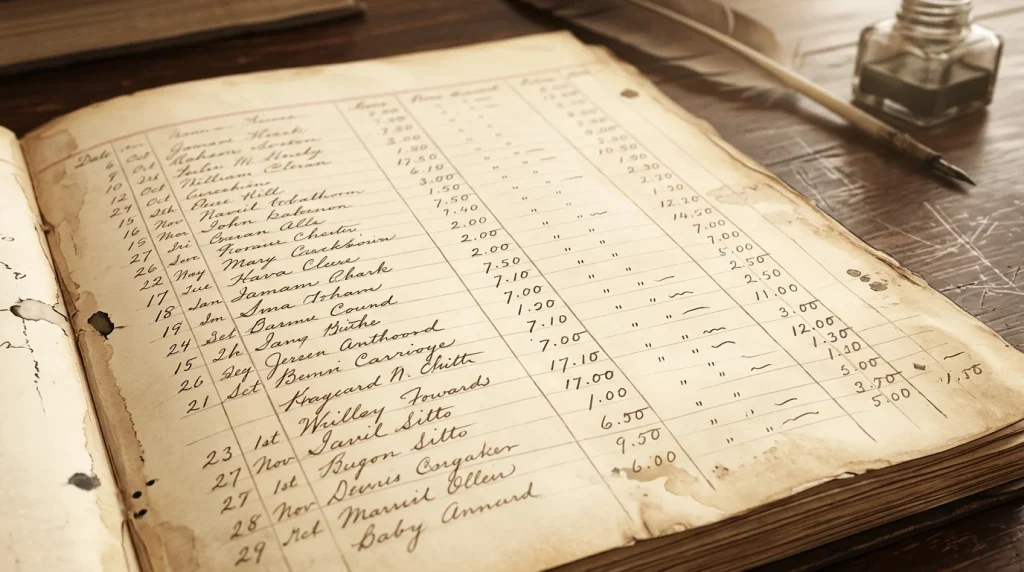
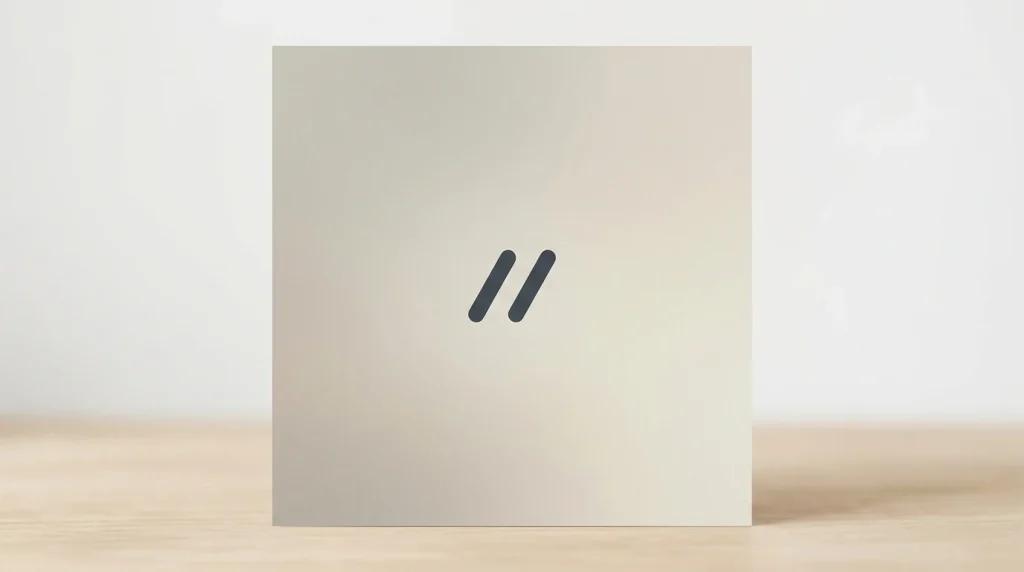
You’ll also encounter the ditto mark — a small symbol resembling two apostrophes or quotation marks (″), placed beneath a word, phrase, or number in a list to indicate it should be repeated from the line above, commonly used in tables, price lists, and inventories to avoid rewriting the same entry multiple times.
Where the Word Comes From
Ditto comes from a Tuscan Italian dialect word, itself a variant of the literary Italian detto — the past participle of dire, “to say” — which traces back to the Latin dicere, also meaning “to speak” or “to say.” That Latin root, dicere, is a genuinely prolific one in English, distantly connected to words like dictionary, verdict, predict, and index.
Here’s the specific, narrower origin most explanations skip past: ditto entered English in the early 1600s for a very particular practical purpose. Italian writers had started using ditto to avoid repeating a month’s name across a series of dates within the same document —
writing something like “the 20th of June” followed by “the 25th ditto” instead of spelling out “of June” again. English merchants and writers, who traded extensively with Italy at the time, picked up this convenient shorthand directly.
It wasn’t until the late 1600s that the word broadened into the general “the same as previously mentioned” meaning used for any repeated item, not just dates.
Not Related to “Dittography”
It’s a completely reasonable assumption that “dittography” — the term for accidentally repeating letters or words while copying text (writing “tabble” instead of “table”) — must share roots with ditto, given how closely both relate to the idea of repetition.
It doesn’t. Multiple etymological sources confirm the two words are unrelated: dittography comes from a separate Greek root, combining dittos (“double”) and graphia (“writing”), entirely independent of ditto’s Italian and Latin ancestry. The overlap in meaning is coincidental, not a shared word history.
Ditto Through the Centuries
The word picked up a few specific extended meanings over time. In the early 19th century, a matching men’s suit — jacket, waistcoat, and trousers all in the same color and fabric — was called “ditto” or “dittoes,” since each piece was effectively a repeat of the same material.
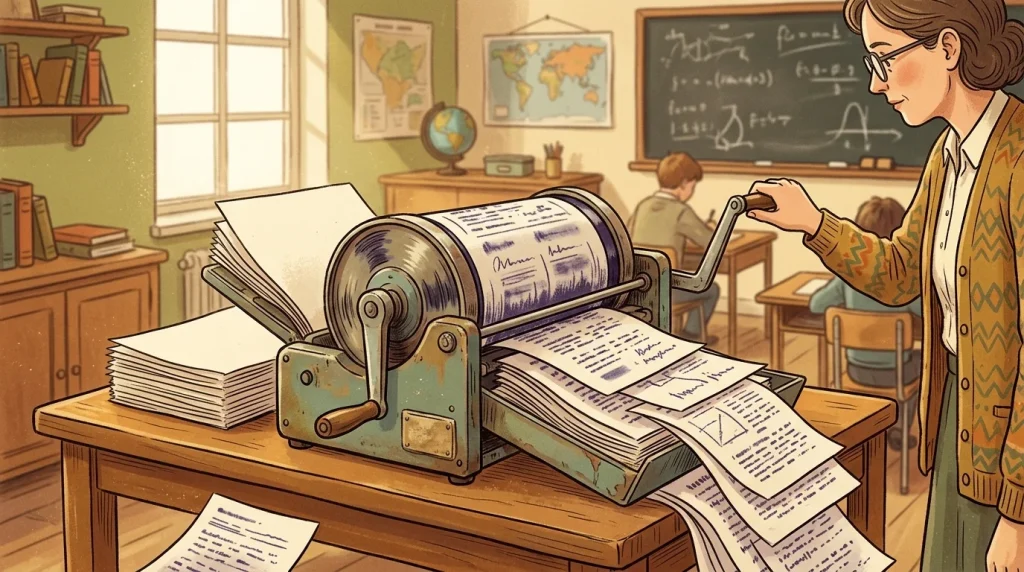
In the 20th century, “ditto” became closely associated with the ditto machine, a once-common duplicating device used heavily in schools and offices before photocopiers became widespread, to the point that “a ditto” became informal shorthand for a mimeographed worksheet or handout for generations of students and teachers.
More recently, “dittohead” emerged in the mid-1990s as a self-description used by devoted listeners of American radio host Rush Limbaugh, expressing agreement with his views.
The word also saw a notable pop-culture bump in 1990 through the film Ghost, where it became closely associated with one of the film’s most memorable romantic exchanges.
Not to Be Confused With: Pokémon’s Ditto
If you landed here after encountering “Ditto” in a completely different context, it’s likely the Pokémon — a pink, blob-shaped creature known for its ability to transform into a copy of other Pokémon.
The character’s name is a clear, deliberate nod to the English word’s meaning (“a copy” or “the same as”), fitting its shape-shifting, duplicating ability perfectly, though it’s a modern trademarked character name rather than a separate dictionary meaning of the word itself.
FAQ
What does ditto mean in simple terms? It means “the same as previously stated” — used to indicate agreement or that something already mentioned applies again.
Where does the word ditto come from? From Italian, ultimately from Latin dicere (“to say”), originally used specifically to avoid repeating a month’s name across a series of dates in the early 1600s.
What is a ditto mark? A small symbol (″), resembling two apostrophes, placed beneath a word or number in a list to indicate it should be repeated from the line above.
Is ditto related to dittography? No — despite both relating to repetition, they come from entirely separate word roots; ditto is from Italian and Latin, while dittography comes from Greek.
What is a dittohead? A self-description adopted by devoted listeners of American radio host Rush Limbaugh in the mid-1990s, expressing agreement with his commentary.
Is Ditto the Pokémon related to the word’s meaning? Yes, in spirit — the character’s name references the word’s “copy” or “same as” meaning, reflecting its ability to transform into duplicates of other Pokémon, though it’s a separate trademarked character name rather than an additional dictionary definition.