Grifter Meaning: 9 Facts, Origins & Modern Usage 2026
Open almost any news story about a collapsed crypto scheme, a wellness influencer selling miracle cures, or a political scandal, and there’s a decent chance the word “grifter” shows up somewhere in the first few paragraphs.

It’s become one of the go-to words for describing a certain kind of confident, charming fraud — and it started life in a much narrower, more specific place than most people would guess. This guide covers what grifter actually means, its genuinely uncertain deeper word history, and how far its usage has expanded in recent years.
See Also: Rizz Meaning
Quick Answer
Grifter means a con artist or swindler — someone who cheats others out of money through deception, charm, or trickery rather than force. It originated in 1906 as American carnival and circus slang,
originally referring specifically to someone running a dishonest sideshow or gambling attraction, before broadening over time to describe any non-violent fraudster.
What Grifter Means
At its core, a grifter is someone who cheats people out of money or valuables through fraud, deception, or manipulation rather than physical theft. Dictionary.com draws a useful, precise distinction: a grifter tricks you out of money through lies, while a thief simply takes it by force —
the end result (you’re out money) is the same, but the method is fundamentally different, relying on persuasion, charm, and your own willingness to trust or believe something, rather than coercion.
Grifters are also commonly called con artists, con men, swindlers, scammers, hustlers, and — in older slang — chiselers, flim-flam men, or gougers. What sets grifter apart slightly from some of these near-
synonyms is a particular connotation of ongoing, somewhat theatrical hustle — the sense of someone perpetually working an angle, rather than pulling off a single isolated scheme.
Where the Word Comes From
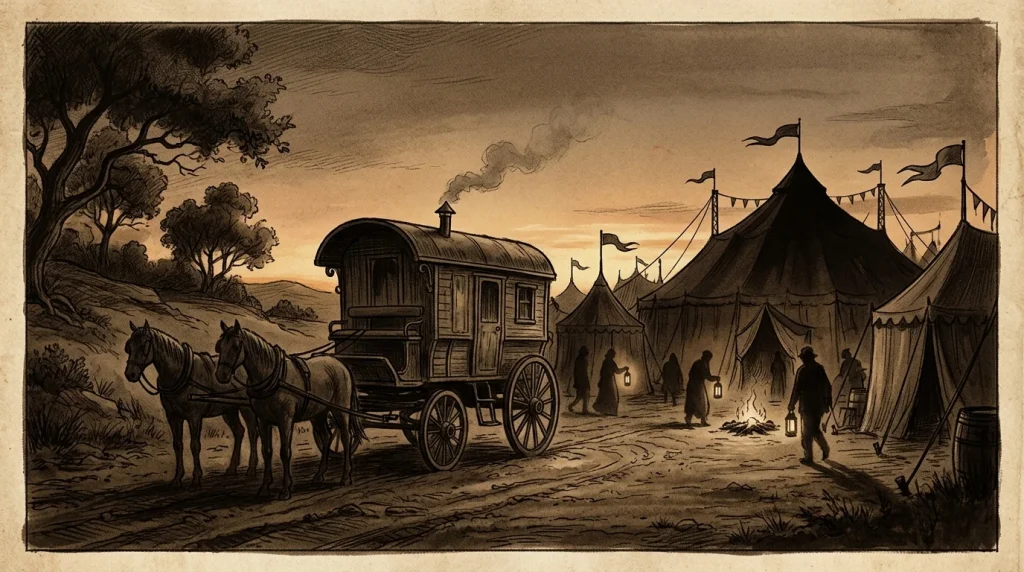
Grifter is first documented in 1906 as carnival and circus slang, describing someone specifically operating a sideshow at a fair or carnival, particularly a dishonest gambling attraction rigged to cheat customers out of their money.
This is a genuinely narrower original meaning than most people would assume — it wasn’t a general word for “any con artist” at first, but specifically carnival-world slang for a particular kind of rigged-game operator working the fairground circuit.
The word’s deeper etymology is where things get genuinely uncertain, and it’s worth being honest about that rather than presenting a tidy, confident word history. Etymologists believe grifter is probably an alteration of the older slang word “grafter” — but even that connection is hedged with “probably,”
not stated as certain. “Grafter,” in turn, likely traces back to British slang from the 1850s meaning simply “one’s occupation” or “one’s line of work” — and that word, in turn, is only possibly connected to an even older word meaning “a ditch” or “a digging” (from Middle Dutch,
related to the verb “to dig”), on the theory that hard, laborious “digging” work became slang for one’s job or trade more generally. Each link in this chain carries real uncertainty, and no single source presents it as a fully settled, unbroken etymology.
Grifter vs Con Artist vs Swindler vs Thief
These words cluster closely together, but there are real shades of difference worth knowing:
- Grifter carries a specific connotation of ongoing hustle, charm, and often a somewhat colorful, theatrical persona — the word tends to evoke a lifestyle or pattern of behavior, not just a single scheme.
- Con artist is broader and more neutral, simply describing anyone who runs a confidence scheme, without necessarily implying the same carnival-adjacent, perpetual-hustler flavor grifter carries.
- Swindler is an older, more formal-sounding term for essentially the same behavior — cheating someone out of money through deception — without much of the colorful cultural baggage grifter has picked up.
- Thief, critically, describes someone who takes property through force or stealth, without necessarily deceiving the victim first — the key distinction from all three of the above terms, which rely specifically on tricking the victim into willingly handing something over.
How the Word’s Usage Has Expanded
While “grifter” started as a very specific piece of carnival slang, its usage today has broadened dramatically — Etymonline notes it gradually extended to describe “any non-violent criminal” over the course of the 20th century, and recent journalism shows that expansion continuing well past its original con-artist core.
Current usage regularly applies “grifter” to figures well outside anything resembling a traditional carnival scam: wellness influencers promoting unproven health claims, cryptocurrency promoters encouraging risky investments, and — increasingly in 2025 and 2026 coverage —
people capitalizing on the artificial intelligence hype cycle, selling courses or expertise they don’t actually have to back up. The word also has a long-standing history of political usage, applied across the political spectrum by different
commentators toward figures they view as using charm, spin, or misdirection for personal gain rather than genuine public service — a usage pattern that spans many different political viewpoints rather than belonging to any single one.
One recent online commentary piece captured a useful way of thinking about the word’s core mechanism, regardless of which modern context it’s applied to: a grifter, in the original carnival sense, is someone who uses charm and misdirection to separate people from their money,
relying specifically on the target’s own desire to believe something. That underlying dynamic — exploiting genuine hope or belief rather than pure gullibility — is arguably what has made the word so adaptable across so many very different modern contexts, from fairground gambling booths to slick online courses.

Grifter in Pop Culture
The word picked up mainstream visibility partly through The Grifters, a well-known 1990 American film (based on a 1963 novel by Jim Thompson) following a trio of small-time con artists, which helped cement “grifter” in broader popular vocabulary beyond its earlier, more niche carnival and crime-fiction usage.
The name has also been used elsewhere in pop culture and product branding — including a comic book character and a well-known line of children’s bicycles — though these uses are unrelated to the word’s core meaning as slang for a con artist.
FAQ
What does grifter mean in simple terms? A con artist or swindler — someone who cheats people out of money through deception, charm, or trickery rather than physical force.
Where does the word grifter come from? It originated in 1906 as American carnival and circus slang, likely an alteration of the earlier slang word “grafter,” though the word’s deeper etymology beyond that point is genuinely uncertain.
What did grifter originally mean, specifically? Someone operating a carnival sideshow, particularly a rigged or dishonest gambling attraction — a considerably narrower original meaning than today’s broad “any con artist” usage.
What’s the difference between a grifter and a thief? A grifter tricks someone into willingly handing over money through deception, while a thief takes property by force or stealth without necessarily deceiving the victim first.
Is “grifter” used in politics? Yes, and has been for a long time — the term is applied across the political spectrum by different commentators describing figures they view as using charm or spin for personal gain rather than genuine service, rather than being tied to any single political direction.
How has the meaning of grifter expanded recently? Beyond its traditional con-artist meaning, current journalism increasingly applies it to wellness influencers, cryptocurrency promoters, and figures capitalizing on artificial intelligence hype without genuine expertise.
What’s the difference between a grifter and a con artist? They’re very close synonyms, though “grifter” carries a stronger connotation of an ongoing, somewhat theatrical hustle or lifestyle, while “con artist” is a more neutral, general term for anyone running a confidence scheme.