Abut Meaning: 9 Facts, Legal Use & Word Origins 2026
A real estate listing boasts that the backyard “abuts a nature preserve,” and it’s clear enough what that means in spirit — but the word is doing more precise work than a casual “near” or “close to.”
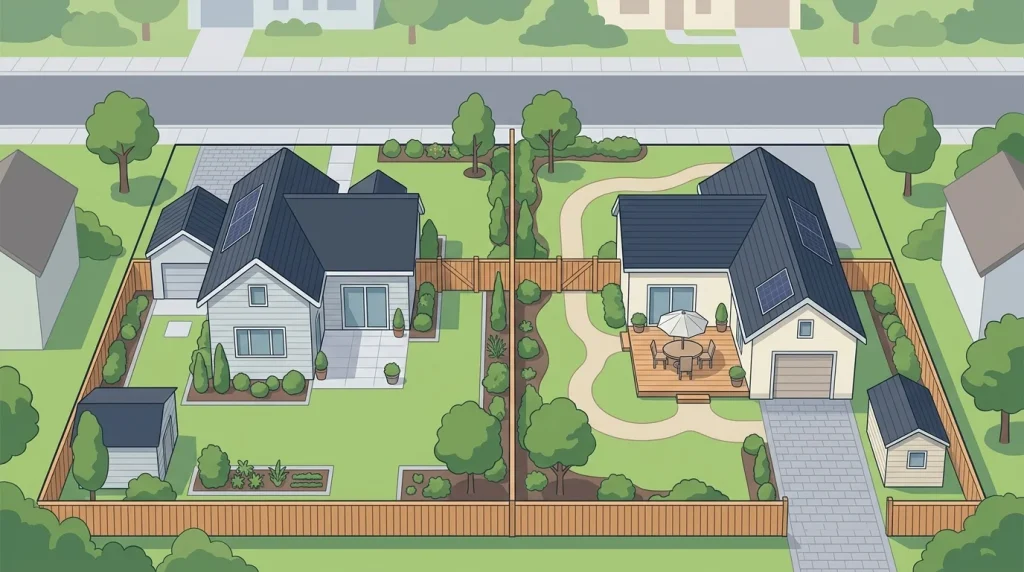
This guide covers exactly what abut means, the specific legal weight it carries in property law, and a genuinely fun word-family connection almost no dictionary entry points out clearly.
See Also: Eno Meaning
Quick Answer
Abut means to touch or border something along an edge, especially to share a common boundary with no gap or intervening space. It comes from Old French, ultimately tracing back to a root meaning “end” — and it’s a genuine etymological cousin of the word “butt.”
What Abut Means
At its core, abut means to touch or border on something along an edge — two properties, structures, or pieces of land that meet directly at a boundary. “Their yard abuts a park” means the yard’s edge directly touches the park’s edge, with nothing in between. It can function as both an intransitive verb (a property abuts something) and a transitive one (two lots abut each other).
The word carries a more precise, formal register than everyday alternatives like “next to” or “near” — you’ll see it far more often in legal documents, real estate listings, architectural descriptions, and geography writing than in casual conversation, where “borders” or “is next to” would typically be the natural everyday choice instead.
Where the Word Comes From
Abut entered Middle English in the 14th century, borrowed from Anglo-French abuter (or aboter), itself built from a- (from Latin ad-, meaning “toward” or “near to”) combined with but or bout, an Old French word meaning “end,” “blow,” or “thrust,” derived from the verb boter or bouter, “to push” or “to strike.” Put together, the word’s original sense was something close as “to come to an end against” or “to touch at an end.”
Here’s a genuinely fun detail worth knowing: that same Old French root, but (“end”), is also the ancestor of the English word “butt” — as in the butt of a cigarette, the butt of a joke, or the rear end of something. Dictionary.com specifically points to this connection as a useful, if slightly crude, way to remember the word’s meaning:
think of “abut” as being related to touching at the “butt,” or end, of something. Merriam-Webster’s own etymology entry cross-references the “butt” entry directly, confirming this isn’t just a cute coincidence but a genuine shared word history — abut and butt are real linguistic relatives, not just similar-sounding words.

A Note on a Fabricated Etymology You May Encounter
Worth flagging directly: at least one lower-quality online dictionary source claims abut derives from Latin “ab” (meaning “against”) combined with “tutus” (meaning “protected” or “safe”). This etymology doesn’t appear in any credible, well-sourced dictionary — not Merriam-Webster, not the Oxford English Dictionary’s etymology entry, not Dictionary.com,
and not legal dictionaries like FindLaw’s. Every reliable source instead traces the word through Old French to the “end/strike” root described above. The “ab + tutus” explanation appears to be simply incorrect, and it’s worth being cautious of etymology claims on lower-quality reference sites that aren’t corroborated elsewhere.
Abut in Everyday and Geographic Use
In general, non-legal usage, “abut” describes any two things meeting directly at an edge or border, without necessarily any strict technical requirement: a new office building might be described as abutting an older historic structure, or a hiking trail might abut a river for part of its length.
Recent journalism illustrates this range well — from a data center campus described as abutting a state line, to a suburban development abutting a construction site, to a city described as abutting neighboring, less stable regions. In all these everyday cases, “abut” simply signals direct contact or adjacency along a boundary.
Abut in Legal and Real Estate Contexts
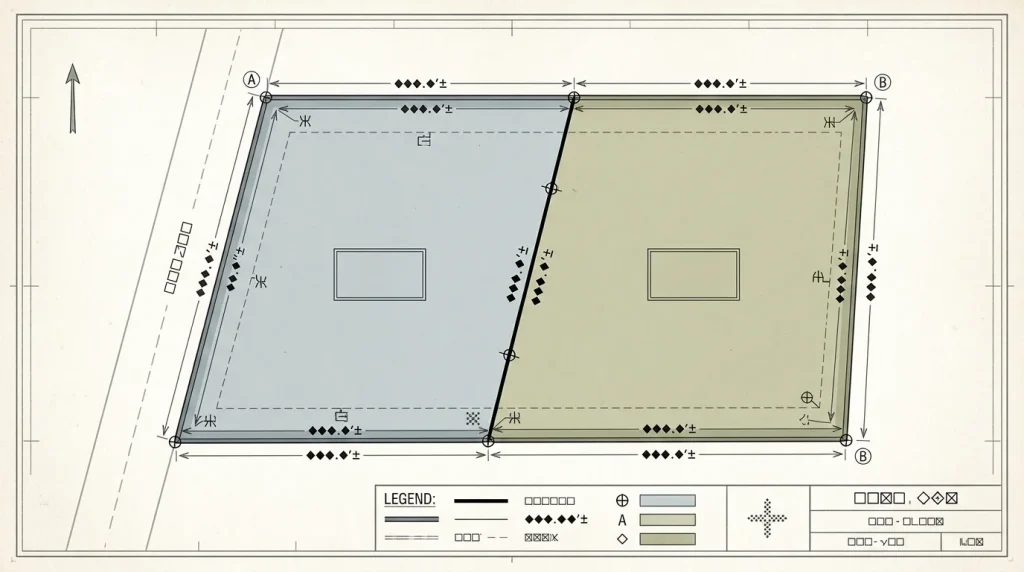
The word carries more precise weight in property law specifically. According to legal reference sources, when referring to real property, “abutting” specifically means there is no intervening land between the two parcels in question — properties that simply share a common boundary line are generally considered abutting.
This precision matters practically: certain statutes require abutting property owners to pay a proportional share of the cost of adjacent street improvements, since direct boundary contact with a road or project creates a specific legal relationship and set of obligations that merely being “nearby” would not.
This is a meaningfully stricter standard than everyday usage might suggest — a property separated from a road by even a narrow strip of land owned by someone else would generally not be considered legally “abutting” that road, even if it’s very close to it.
Abutment: A Related Architectural Term
A closely related noun, “abutment,” developed from the same word family and carries its own specific technical meaning in architecture and engineering: a structure that supports the end of a bridge, arch, or similar structure, absorbing lateral thrust or weight at the point where the structure meets the ground or another support.
Bridge abutments, for instance, are the substantial supporting structures at either end of a bridge span. This technical usage traces back to the same underlying “end” concept as “abut” itself — a structure literally supporting something at its end point.
Abut vs Adjoin vs Border
These near-synonyms are often used interchangeably, but carry slightly different shades:
- Abut implies direct contact at an edge, often with a slightly more formal or technical register, and — in legal contexts specifically — no intervening land.
- Adjoin is a close, largely interchangeable synonym, generally meaning to be next to and in contact with something, without necessarily carrying the same strict legal precision abut can carry in property contexts.
- Border can describe either direct contact (a country bordering another) or simply being situated along an edge or boundary more loosely, and is the most commonly used, least formal-sounding of the three in everyday speech.
FAQ
What does abut mean in simple terms? To touch or border something directly along an edge, typically without any gap or intervening space.
Where does the word abut come from? From Old French, ultimately from a root meaning “end” or “blow” — the same root that also gives English the word “butt.”
Is abut related to the word butt? Yes — genuinely, not just by coincidence. Both trace back to the same Old French root meaning “end,” and Merriam-Webster’s own etymology confirms the connection.
What does “abutting property” mean legally? Property that shares a common boundary with another parcel, with no intervening land between them — a stricter standard than simply being nearby or close.
What’s the difference between abut and adjoin? They’re very close synonyms; “abut” sometimes carries a more formal or legally precise connotation, particularly regarding the “no intervening land” standard in property law, while “adjoin” is a bit more general.
What is an abutment? A related architectural and engineering term for a structure that supports the end of a bridge, arch, or similar structure — most commonly seen in “bridge abutment.”
Can abut be used for anything besides land or property? Yes — it can describe any two structures, objects, or areas that touch directly at an edge, such as a building abutting another building, or a trail abutting a riverbank.